Grana Padano is one of Italy's most loved
and recognisable cheeses, with a delicate yet
complex flavour, a firm, granular texture and
a rich, nutty aroma.
CHEESE
GRANA
PADANO
OVERVIEW
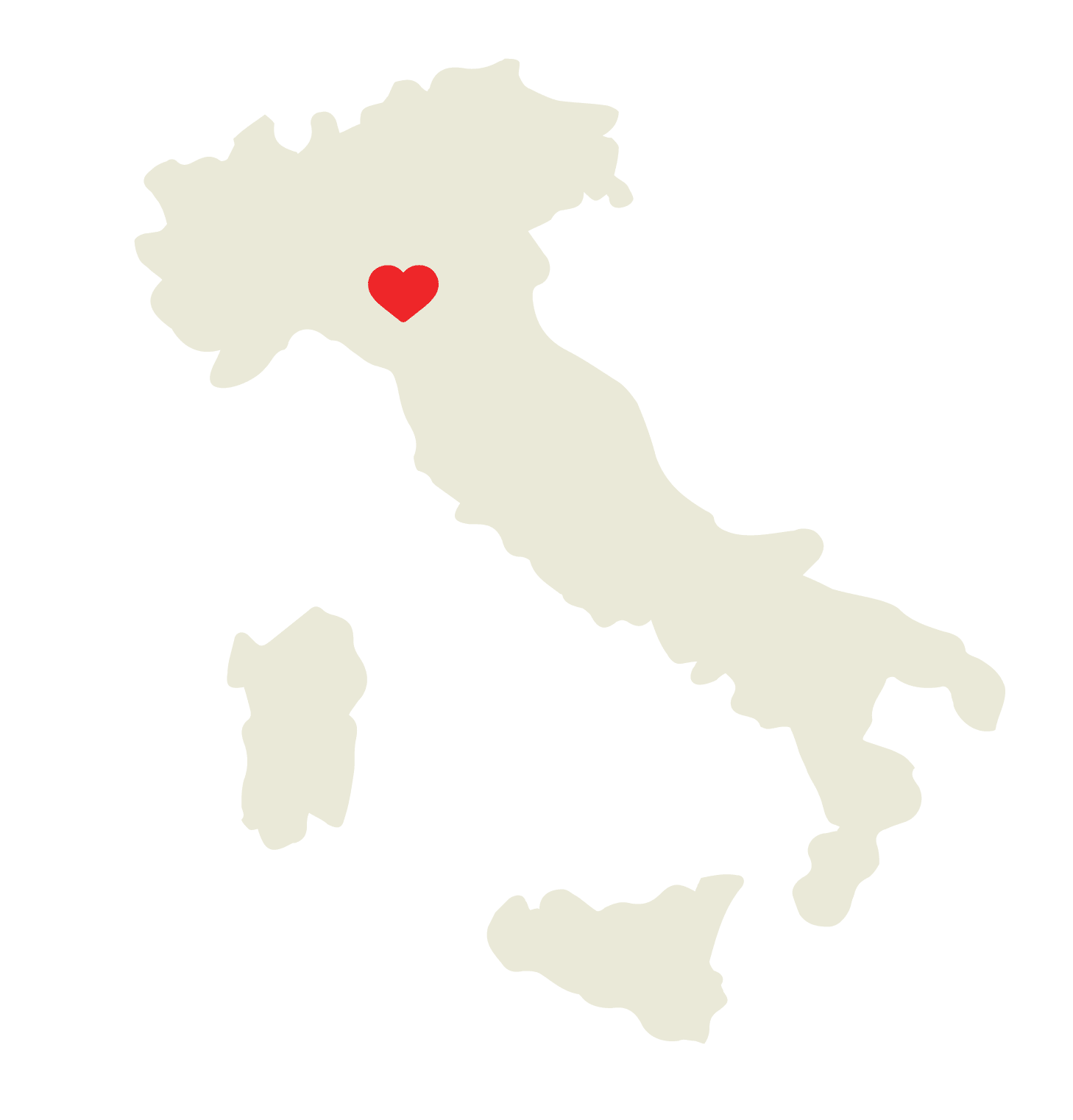
Nearly a 1000 years ago, the Cistercian monks from the fertile po Valley, in North of italy, developed an original recipe to use the excess milk produced in the area.
It is thought to have been first made in the Abbey of Chiaravalle in 1135. due to its grainy structure, so different from all other cheeses, it was given the name “GRANA”.
Today the production method has hardly changed. Strict dairy farming practices, including a special cattle diet, results in a milk of unique flavour and nutritional value.
Only raw partially skimmed milk from the Grana Padano production area can be used. After natural separation of the cream, the milk is poured into traditional copper vats and then processed: a natural whey starter, deriving from the previous day cheese-making, is added along with pure calf rennet.
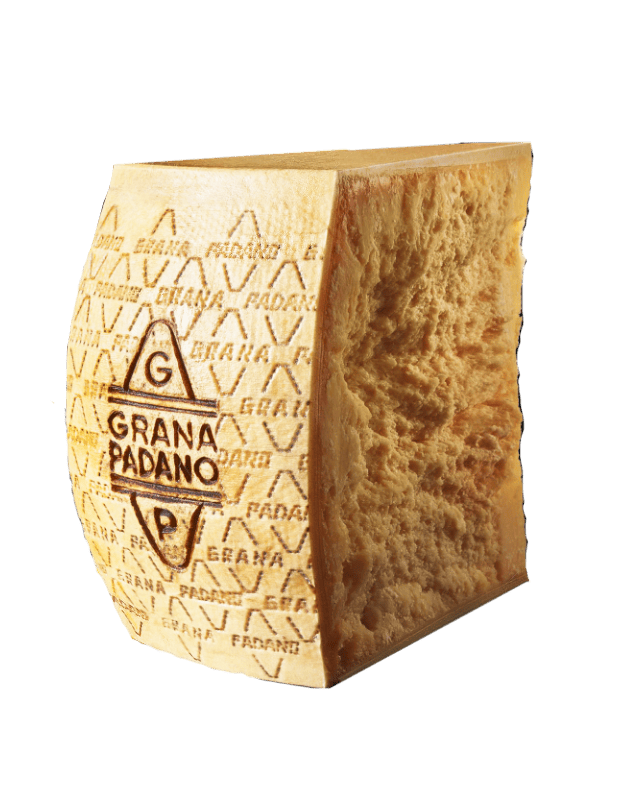
Once the coagulation has occurred, the curd is chopped into small grains by the aid of a manual instrument called “spino”. Heating to 53°C follows and then, after a resting period of around an hour, the twin fresh wheels of cheese are collected, wrapped in linen cloths and placed into moulds, where they receive the initial mark of origin: small lozenges with alternatively “Grana”and “Padano” written inside and all the other signs appearing on the crust except for the rebrand.
Finally, before the ageing process begins, the wheels are soaked in brine for around 23 days.
The ageing process lasts for a minimum of 9 to over 24 months. At 9 months, each wheel is carefully tested for appearance, aroma and texture. This important step is carried out exclusively by the impartial expertise of the Consorzio Tutela Grana Padano (protection Consortium) technicians.
Only the best wheels receive the fi re-branded logo officially grading them GRANA PADANO PDO cheese.
This protection Consortium, founded in 1954 and encompassing all the producers , not only is responsible for the quality of each wheel, but also promotes and protects the name Grana Padano around the world, ensuring the consumers that whenever they buy a piece, they are dealing with a genuine Grana Padano PDO cheese.
Each wheel of cheese must age a minimum of 9 months, and after examination by testers from the Consorzio
and an impartial 3rd inspection body, it receives a fire-branded mark to qualify and certify that it is perfect.
If the wheel does not pass the tests, the rind will be “etched” (so as to hide the small lozenges) and cannot
be sold as Grana Padano.
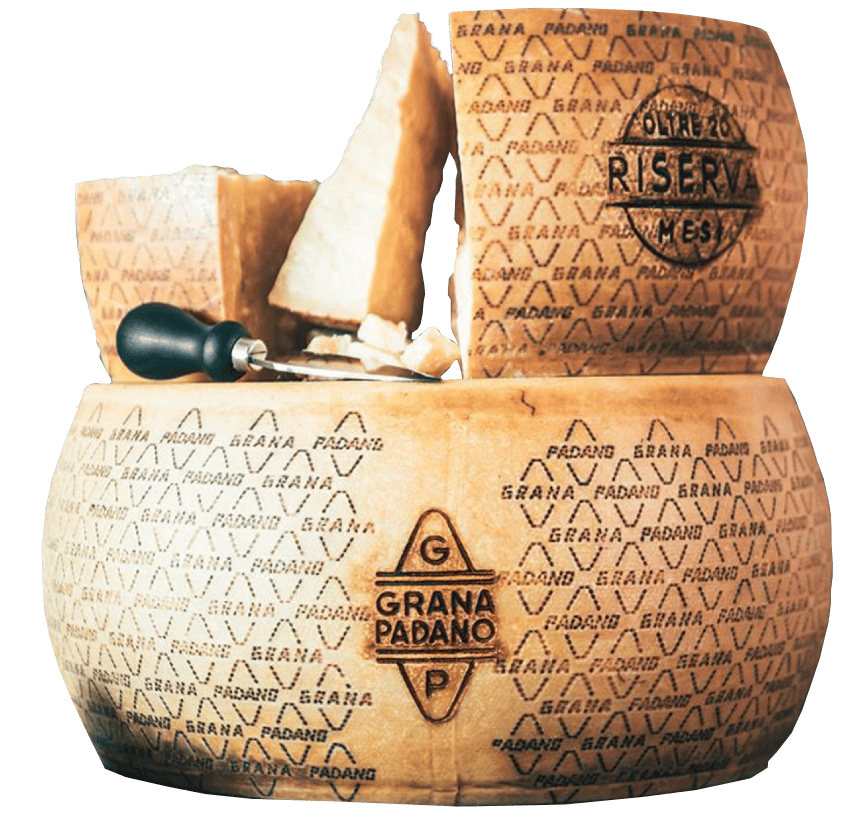
At 20 months of ageing, if the producer requests it, the wheels may undergo a further set of quality tests by
the consorzio’s technicians, so as to receive the fire brand “Riserva”.
Grana Padano may age to even over 24 months with a texture that becomes grainier and its taste and
flavour evolve, becoming more intense yet never overpowering.
Due to these different ageing stages, Grana Padano cheese is a very versatile cheese, which can be served on
its own or included in a variety of recipes.
Grana Padano possesses unique nutritional features such as quality proteins,
vitamins and mineral salts, especially calcium. It is lactose free due to the characteristics of the production
method and the long ageing process.
• It takes 15 litres of naturally partially-skimmed milk to produce 1 kg of Grana Padano PDO
• 30g of Grana Padano PDO contain the same nutritional value to approximately half a litre of milk (1 pint of
milk)
• 50g of Grana Padano PDO provide 600mg of Calcium - 60% of the daily requirement for adults, 50 % of an
adolescent’s requirement. (1 and ½ pints of milk).
TRADITION, GUARANTEED
BY QUALITY.
YOU MIGHT ALSO LIKE
DOP CHEESE
MASCARPONE
WITH ASIAGO STAGIONATO PDO